
AC Moore Knitting Needles & Circular Needles
Our bamboo knitting needle set offers the warm feel and lightweight performance crafters love for extended sessions. Each pair features smooth, snag-free tips that glide through every stitch without splitting yarn fibers. The natural bamboo construction provides just enough grip to control slippery yarns while remaining gentle on hands during marathon knitting projects.


We stock AC Moore knitting needles in four primary materials because each brings distinct performance traits to different yarn types and knitting styles. Bamboo needles grip fibers gently, making them ideal for beginners working with slippery cotton or preventing dropped stitches in complex lace patterns. The warm surface feels comfortable during long sessions and produces minimal clicking noise.
Choosing Needle Type for Your Project
Straight needles remain the default choice for flat pieces like scarves, dishcloths, and blanket squares worked back and forth in rows. The 10 or 14-inch length keeps the work portable while providing enough needle to hold cast-on stitches comfortably. We recommend straight needles for beginners learning basic knit and purl stitches because the two separate needles make stitch mechanics visible.
Circular needles open possibilities beyond tube knitting — many knitters prefer them for flat work too, since the cable holds the project’s weight instead of cantilevering everything off the needle tips. The same durability that makes worsted weight yarn popular for everyday garments applies to choosing circulars: they withstand the flex and stress of heavy projects without warping. A 32-inch circular accommodates sweater fronts and backs knit flat, while 16-inch circulars work perfectly for hat brims and cowls in the round.
Gauge Accuracy & Needle Sizing
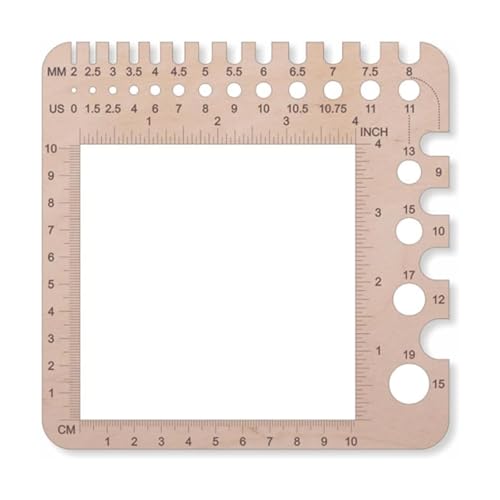
Every knitting pattern specifies a target gauge — the number of stitches and rows per inch that produces the designer’s intended dimensions. Needle size directly controls this gauge, since larger needles create looser stitches and smaller needles create tighter fabric. We label our needles with both US and metric sizing because patterns from different regions use different standards.
A US size 8 needle measures 5.0mm in diameter, while a US 10 measures 6.0mm — each full size represents roughly 0.5mm. Your personal knitting tension matters as much as needle size: tight knitters often need to size up from the pattern’s recommendation, while loose knitters size down. We recommend working a 4-inch gauge swatch in the pattern stitch before starting any fitted garment.
Needle specifications & materials
More Yarn & Knitting Essentials




Customer reviews


Questions About Our Knitting Needles
Start with US size 8 or 9 needles for your first scarf project. These mid-range sizes work well with worsted weight yarn, which is forgiving for beginners still developing even tension. The larger needle creates visible stitches that make it easier to spot and correct mistakes.
Choose bamboo or wood needles for your first project — the natural grip prevents stitches from sliding off the tips while you’re building muscle memory. A 10-inch straight needle length keeps the project portable and comfortable to hold during practice sessions.
Yes, you can substitute straight needles for circular needles when knitting flat pieces worked back and forth in rows. Many knitters actually prefer circulars for flat knitting because the cable supports the project’s weight, reducing wrist strain on large pieces like blankets or sweater fronts.
You cannot substitute straight needles when a pattern calls for knitting in the round, since circular needles create the continuous tube necessary for seamless hats, cowls, and sweater bodies. For those projects, the circular construction is fundamental to the garment’s design.
Match needle material to your yarn’s texture and your knitting tension. Slippery yarns like silk or bamboo rayon pair well with grippy bamboo or wood needles that prevent dropped stitches. Sticky yarns like mohair or wool blends glide more easily on smooth metal needles.
Your personal tension matters too — tight knitters often prefer metal needles because the low friction helps stitches slide more freely, while loose knitters benefit from wood’s natural grip. Many experienced knitters keep needles in multiple materials and choose based on each specific project’s requirements.
US needle sizes use whole numbers where larger numbers indicate thicker needles, while metric sizes measure the actual diameter in millimeters. A US size 8 needle equals 5.0mm, and a US 10 equals 6.0mm. Some vintage US needles also carried fractional sizes like 10.5, which equals 6.5mm in metric.
When following patterns from international designers, you’ll see metric sizes listed. We label our needles with both systems so you can match any pattern recommendation. If your pattern lists only one system, use a needle conversion chart to find the equivalent in your preferred measurement.
Quality needles last for decades with proper care, though you’ll eventually notice wear on frequently-used sizes. Replace needles when the tips develop burrs that catch yarn fibers, when wooden needles show splintering or cracking, or when circular needle cables develop permanent kinks that interfere with knitting.
Metal needles rarely need replacement unless dropped on hard surfaces, which can create nicks or bend the tips. Bamboo and wood needles may need replacing sooner if they dry out or crack, typically after five to ten years of regular use. Inspect needles before starting a new project — catching a damaged tip early prevents yarn splitting mid-pattern.
TSA allows knitting needles in carry-on luggage on US domestic flights, though final decisions rest with individual security officers. Bamboo and wood needles generally pass through screening more easily than metal. Circular needles attract less attention than long straight needles, since the cable makes them appear less pointed.
Pack a self-addressed stamped envelope in your bag as backup — if security confiscates your needles, you can mail your partial project home rather than abandoning it. Check your destination country’s regulations for international flights, since some nations prohibit needles in carry-on bags.
Adult hats typically require a 16-inch circular needle, which accommodates the 18 to 22-inch circumference most hat patterns create. Knit the brim on the 16-inch circular, then switch to double-pointed needles or the magic loop technique when decreasing for the crown reduces stitch count below the circular’s minimum.
Child-size hats often start on a 12-inch circular since smaller head circumferences need fewer stitches. Large slouchy hats may work better on a 20-inch circular to prevent crowding. The goal is choosing a cable length slightly shorter than your project’s circumference — too much extra cable creates difficult-to-manage loops in your work.