
Mat Boards & Custom Frame Matting | A.C. Moore
Our acid-free mat boards preserve artwork, photos, and collectibles for decades without yellowing or damaging your pieces. Every board arrives pre-cut with precision beveled edges that create professional depth and shadow lines around your work.
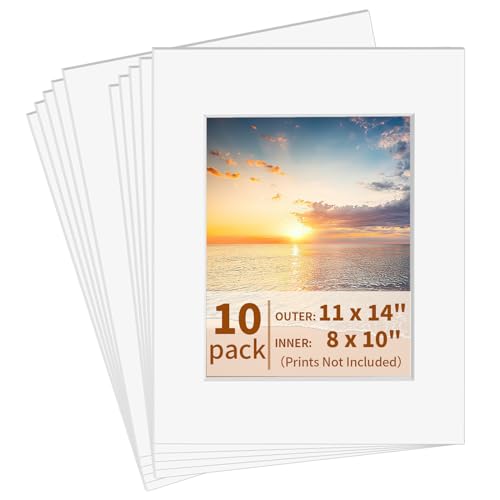


Mat width influences how viewers perceive scale and importance. For small prints under 11×14 inches, a 2- to 3-inch border keeps the mat from overwhelming the art. Larger pieces — 16×20 and above — benefit from 3- to 5-inch widths that create breathing room and anchor the composition within the frame.
Mat Board Materials and Longevity
Acmoore mat board construction determines how long your framed piece remains pristine. Standard wood-pulp mats contain lignin, an organic polymer that oxidizes over time, turning brittle and yellow. This discoloration bleeds into paper artworks, staining edges and degrading fibers within a decade.
Acid-free mats use purified wood pulp or cotton rag with lignin removed and a calcium carbonate buffer added. The buffer neutralizes environmental acids from pollution, humidity, and the frame’s own materials, maintaining a neutral pH for 50 to 100 years. Conservation-grade cotton rag mats extend that window beyond a century, making them essential for museum collections and irreplaceable originals.
Custom Cutting and In-Store Services
Bring your artwork and frame dimensions to any A.C. Moore location for custom mat cutting. Our team measures the frame’s rabbet depth, calculates precise window dimensions to reveal or conceal specific borders of your piece, and cuts beveled openings with computerized precision.
We accommodate irregular shapes — ovals, circles, multiple openings for photo collages — and off-size vintage frames that don’t match standard mat dimensions. Turnaround is typically same-day for single mats, next-day for double mat sets or specialty fabrics.
Premium matting essentials
Complete Your Framing Project


Customer reviews


Mat Board Questions
Check the product label or packaging for terms like acid-free, archival, or conservation-grade. Reputable brands print the pH level and specify whether lignin has been removed. Our staff can also verify the mat’s composition and show you the manufacturer’s archival certifications before cutting.
If you’re examining an existing mat, look for yellowing or brittleness at the edges — signs that lignin is breaking down. Acid-free mats remain white or retain their original color for decades without discoloration.
Acid-free mats work for both, but oil paintings require extra ventilation. Oil paint releases solvents and moisture as it cures, sometimes for years after completion. If sealing an oil painting tightly against a mat and glazing, leave a small air gap using spacers or omit the glazing entirely for a floating frame effect.
Photographs are less chemically active and pair well with standard acrylic or glass glazing directly against the mat. Just ensure the mat is acid-free to prevent chemical migration into the photo emulsion.
A 2.5- to 3-inch border works well for 8×10 prints, creating an overall frame size of 11×14 or 12×16 inches. This proportion keeps the mat from dominating the image while providing enough separation from the frame edge.
For very busy or colorful prints, a narrower 2-inch mat keeps attention on the artwork. Delicate line drawings or sparse compositions benefit from wider 3- to 4-inch borders that give the image room to breathe.
It depends on the poster’s sentimental or monetary value. Limited-edition signed prints and vintage posters worth hundreds of dollars justify conservation mats to preserve investment value. Mass-produced decorative posters that can be replaced for under fifty dollars are fine with standard acid-free mats.
Even for reproductions, acid-free mats prevent yellowing and extend the print’s lifespan, so they’re worth the small price difference if you want the piece to look fresh for decades.
Yes, if exposed to high humidity or rapid temperature swings. Mats absorb moisture from the air and expand; when humidity drops, they contract. Repeated cycling causes warping, especially in thin 2- or 4-ply boards.
To prevent warping, frame artwork with a sealed backing board and store spares in a dry location. If a mat does buckle, you can sometimes flatten it by placing it under weight in a controlled environment, but replacement is often more reliable.
Single matting uses one board with a beveled window. Double matting layers two mats, with the inner mat’s window slightly larger so a narrow reveal — typically 1/4 to 1/2 inch — of the inner color shows between the artwork and the outer mat.
Double mats add visual depth and let you introduce a second color that pulls tones from the artwork. They also create a more formal, gallery-style presentation ideal for certificates, diplomas, and fine art.
Inspect mats every few years for yellowing, brittleness, or acid burn halos around the artwork. If the mat was non-archival and the piece is valuable, replace it immediately with acid-free or conservation-grade board to stop further damage.
Archival mats in controlled environments can last 50 to 100 years without replacement. If you notice discoloration despite using quality mats, check for environmental issues like humidity or UV exposure that need correction alongside mat replacement.